
For producers
Exhibiting at a trade wine fair: choosing and making it pay
For an independent estate, a fair is a heavy investment: one or two days away from the vines, open bottles, a stand, travel. Well chosen, it is also the fastest way to let dozens of buyers taste your wines and open new accounts. Badly chosen, it is a day spent serving the merely curious. Here is how to choose a professional wine fair, work out its real cost and leave with customers rather than a pile of business cards.
Consumer or trade: two different trades
A consumer fair is judged by the evening's till: you sell bottles and cases directly to individuals. A trade fair is judged weeks later. You sell almost nothing on the spot; you meet wine shop owners, restaurateurs, sommeliers, agents or importers who, if convinced, will order afterwards, and keep reordering for years.
Both have their place in an estate's strategy, but they are not prepared in the same way and are not measured with the same indicators. What follows concerns trade fairs.
Large fairs, collective fairs and tight tastings
The offer falls into three families:
- The large international fairs, in Paris, Düsseldorf or elsewhere: thousands of exhibitors, many foreign buyers, export in sight. The cost is high (by way of example, an interprofession circular showed a shared stand of around 4 m² at Wine Paris 2025 at €2,840 excl. VAT, excluding transport and accommodation) and competition is played out aisle by aisle.
- Regional and collective fairs, often organised by an interprofession or an appellation association: a more accessible cost and appellation visibility, but you exhibit next to your direct neighbours.
- Tight professional tastings: a few dozen estates, a targeted audience of buyers, a short format. Fewer visitors, but longer conversations and limited competition.
There is no best format in absolute terms, only the one that matches your target. An estate aiming at export will look for importers where they are; an estate that wants to open wine shops and restaurants in Paris will do well to choose a format where these buyers have time to taste.
Working out the real cost of a fair
The stand price is only part of the bill. To compare two fairs, add everything up:
- The stand or participation, and what it does or does not include: furniture, glasses, ice, water.
- Transport of the bottles and equipment.
- Open bottles, and those that will go as samples.
- Travel and accommodation, for you and for the person accompanying you.
- Your time, preparation and follow-ups included, and what your absence costs the estate.
Then set this cost against the result. The most telling indicator is not the number of visitors, but the cost per opened account: the total cost of the fair divided by the number of buyers who actually ordered in the following months.
An example, purely illustrative: a fair that costs you €1,500 in total and brings you four new customers works out at €375 per customer. If each orders ten cases of six bottles a year, with a margin of €6 per bottle, one customer brings €360 of margin a year: it takes a little over a year to make the fair pay, and each subsequent restock becomes profit. With a single opened account, the same fair takes more than four years to pay for itself.
Keep these accounts fair by fair, over two or three years. It is the only way to know which ones deserve to be repeated.
The right questions to ask the organiser
Before registering, ask:
- Who are the visitors? Wine shop owners, restaurateurs, importers, individuals? Is their activity verified?
- How many are there, and how many estates exhibit? The number of buyers per exhibitor tells you how many real conversations you can hope for.
- How many estates from your appellation will be present? Five Chablis side by side means five times less attention for each.
- What is the format? Day, hours, duration. A restaurateur travels more willingly on a closing day.
- What is provided? Glasses, spittoons, ice, service, communication to buyers.
- What happens afterwards? List of visitors, introductions, follow-up.
If possible, visit the fair first as a visitor: it is the best way to judge attendance and the quality of the audience.
Preparing the fair to leave with customers
Before
Tighten your range: four to six well-chosen cuvées are worth more than twelve. Print your trade price list and your terms. Warn the buyers you already know, and pick out those you want to meet. Our guide to selling your wine to wine shops and restaurateurs details the trade price and the tools to prepare.
During
Note every serious conversation: name, establishment, cuvées tasted, interest, next step. Ask as much as you present: their clientele, what they are missing, their volumes. Buyers prepare too; our buyer-side guide to the tasting shows how they organise their route and their questions.
After
Follow up within 48 hours, while the tasting is still fresh in both memories. Send the price list and technical sheets, offer a sample or a first trial order. It is often this follow-up that makes the difference between a contact and a customer. Before ordering, the buyer will scrutinise your estate: our checklist for listing a new estate shows the questions your follow-up should already answer.
The Cepino format: one estate per appellation
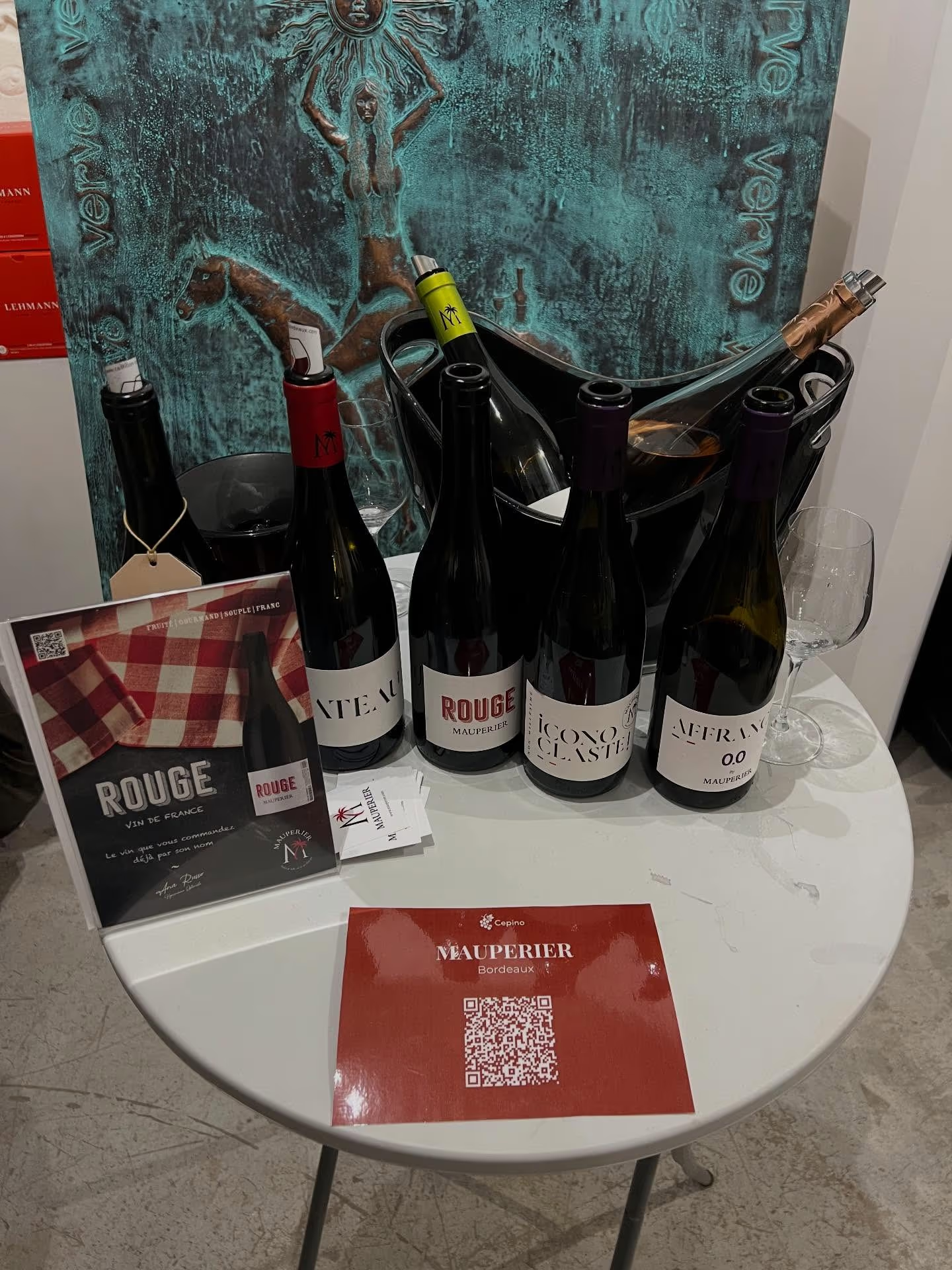
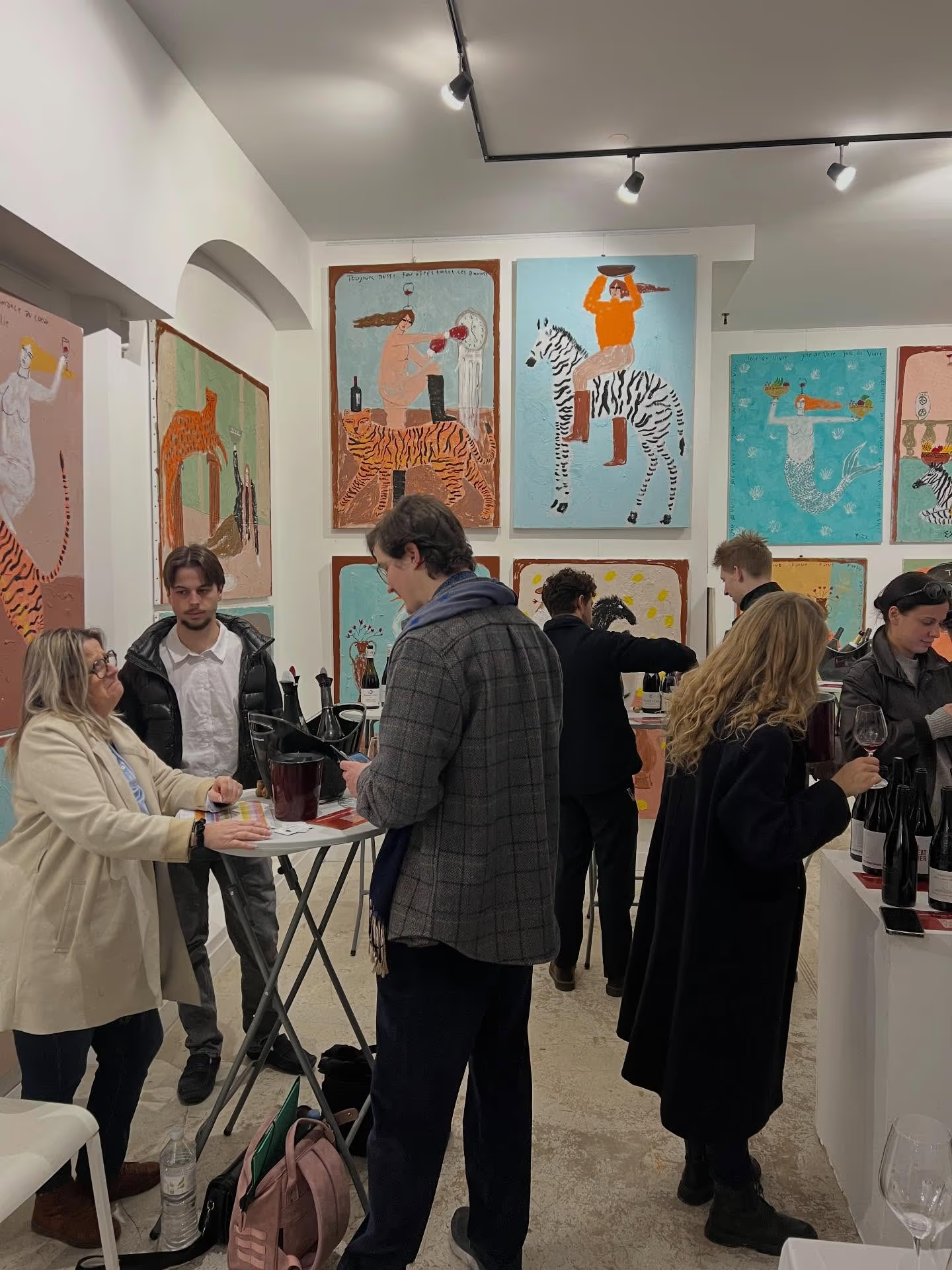
Cepino tastings were designed so that the exhibitor meets buyers in good conditions. Every month in Paris, some thirty estates and around a hundred trade buyers, whose activity is verified, gather, most often in an art gallery, on a Monday at the end of the day, the closing day of many restaurants. The rule of only one estate per appellation limits direct competition from one table to the next.
Cepino sets up the stand and provides the sommelier, the caterer and the photographer: you come with your wines. Between two tastings, your sheet remains visible in the catalogue of estates, online and in the app. The first tasting is included in the membership, the following ones are available individually, and you then sell at the estate price, with no commission. The terms are detailed on the producers page, and the tastings page announces the next dates.
In summary
A good trade fair is not measured by the number of visitors, but by the number of customers it brings you and what they cost you. Choose a format suited to your target, calculate the full cost, prepare a tight range and clear tools, then follow up quickly. A fair that has not kept its promises after two or three editions deserves to give way to another.
More from the journal